

Practical questions about eating, crown colour, long-term care and the factors that may lead to repair or replacement.
October 10, 2026
Dental crowns need care and periodic assessment. What you can eat after fitting depends on the restoration and your individual instructions. Appearance and longevity also depend on the supporting tooth or implant, gums, bite and maintenance. A crown is not guaranteed to remain unchanged or last for a fixed number of years.
Follow your treating dentist's written instructions about when to eat and which precautions apply to your crown and fitting method. Avoid chewing while your mouth remains numb, because you may accidentally injure your lips, cheeks or tongue.
Take particular care with very hard or sticky foods, especially just after treatment. Temporary crowns protect prepared teeth while the final restoration is made, and sticky foods can pull on them. Very hard foods or objects can damage teeth and restorations. Leeds NHS crown information.
Permanent crowns are intended to support normal eating, but avoid chewing ice, biting exceptionally hard objects or using your teeth to open packaging. Your instructions may differ for temporary, final and implant-supported restorations. If a crown feels loose, your bite feels uncomfortable or pain persists, contact the treating dentist for assessment. Crown-care information.
A crown on a natural tooth and a crown connected to an implant have different foundations. If the implant is healing or the restoration is provisional, the treatment plan may include additional chewing restrictions. Follow your treating clinician's instructions for that stage; a newly fitted crown does not by itself establish that the implant is ready for normal loading.
Our implant stages and trips guide explains the distinction.
Ceramic crowns can maintain their underlying colour well, but their appearance may change. Zirconia and lithium-disilicate restorations have different compositions and designs; E.max CAD is a lithium-disilicate product. Ask which material and construction your plan specifies. A material name does not establish that a crown will remain stain-free indefinitely. Ivoclar material information.
Possible reasons for an appearance change include:
These possibilities do not establish the cause of a particular patient's discolouration. Research on ceramic finishing and laboratory studies of underlying colour support careful material selection; they do not establish an individual stain rate or predict when a crown will change appearance. Ceramic finishing review · Underlying colour and lithium-disilicate crown study.
Have visible discolouration assessed before deciding on cleaning, polishing, repair or replacement.
Ceramic crowns do not whiten like natural teeth. Whitening natural teeth may therefore change their match with existing crowns. Have the cause of a mismatch assessed before trying to change the colour of your smile; whitening is not a way to reliably recolour ceramic crowns. American Dental Association whitening guidance.
The dentist can advise whether professional cleaning, polishing, repair or replacement is appropriate. Avoid scraping a crown or using an unapproved abrasive product to remove a mark.
Dental crowns can remain functional for many years, but there is no single guaranteed lifespan. Studies describe groups of restorations over particular follow-up periods; they cannot give an expiry date for an individual crown. Survival in a study also does not necessarily mean that no maintenance or repair was needed. Review of tooth-supported single crowns.
Relevant considerations include the supporting tooth or implant, oral hygiene, gum health, grinding or clenching, bite forces, smoking and other habits, material, fit and continued care. Tell your dentist about medical conditions, past treatment and changes in general health so they can assess their relevance to your care. These factors do not have the same effect in every patient.
Decay, gum disease, loss of retention, fracture, wear or changes in the supporting tooth may require earlier repair or replacement. Long-term clinical research shows that outcomes vary between patients and restorations. Ask your treating dentist to discuss realistic expectations for your own circumstances. Long-term crown cohort.
Clean your teeth and the areas between them as your dentist or hygienist advises, and attend the review schedule recommended for your oral health. A crowned natural tooth can still be affected by decay or gum disease. Discuss grinding, difficult-to-clean areas or repeated discomfort at your reviews. Leeds NHS maintenance information.
If sensitivity, gum soreness or chewing discomfort persists or worsens, seek assessment. Do not assume every symptom is a routine part of fitting. A loose, damaged or painful restoration needs professional advice. When to contact a dentist.
No. A treatment warranty sets out particular cover and conditions; it is not a guarantee of clinical lifespan. Treatment cover, laboratory terms and manufacturer terms should be read separately in the documents that apply to your case. Do not infer a laboratory or manufacturer guarantee from a material name.
Read our aftercare and warranty checklist. Your individual written terms and clinical instructions govern your arrangements.
For assessment and treatment options, see dental crowns in Antalya. Contact New Look Smile Group to coordinate your questions with the treating provider. The treating dentist determines diagnosis and care.
Planning your treatment journey? Ask our team about your options, accommodation and next steps — no pressure to book.
Get your free consultation

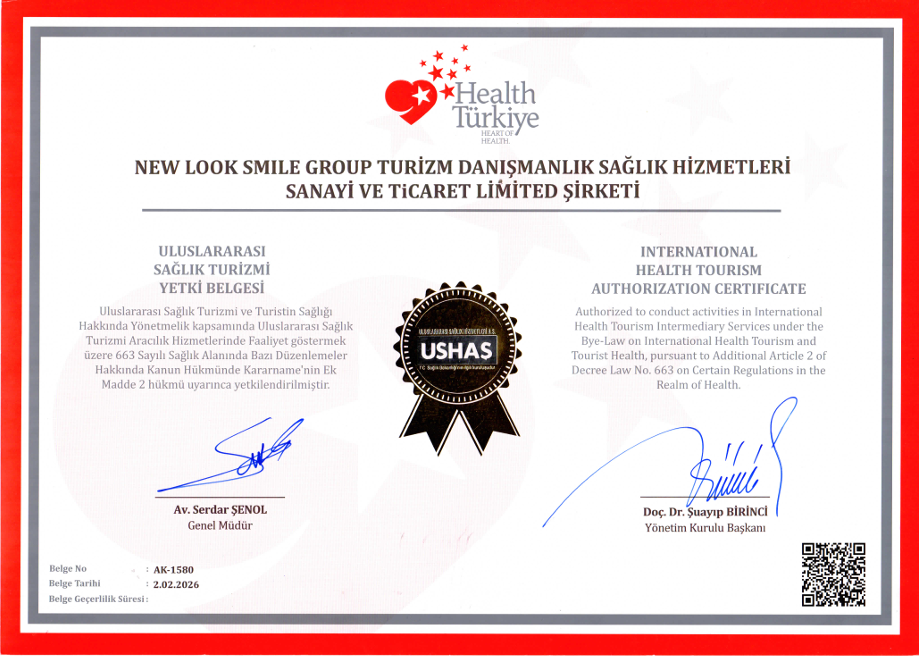
Ministry of Health Authorized — International Health Tourism Authorization, Certificate AK-1580. Click the certificate to view it in full.