

Menu
Healthcare Services · Hair Transplant
Hair Transplant in Antalya, Turkey
A hair transplant moves your own healthy follicles from a donor area to where hair has thinned or gone. This is an honest guide to FUE, DHI and Sapphire FUE, who is a realistic candidate, what the 3-night trip to Antalya involves, how healing actually unfolds over 12 months, and the limits no clinic should hide from you.
Ask About a Hair TransplantFree online assessment · personalised planning · clear next steps
What is a hair transplant?
A hair transplant is a minor surgical procedure carried out under local anaesthetic. Individual follicular units are taken from a donor area — usually the back and sides of the scalp, where hair is genetically resistant to thinning — and placed into the areas that have thinned or receded. Because the transplanted follicles keep the characteristics of the donor area, they are expected to keep growing in their new position.
It is not a cure for hair loss. It redistributes the hair you already have. That single fact shapes every honest conversation about candidacy, density and long-term planning — and it is why a proper assessment comes before any promise about numbers.
Who may be a realistic candidate?
Good candidates usually have stable or predictable hair loss, a healthy donor area with enough density to supply the grafts needed, and realistic expectations about coverage. Age, the pattern and stage of loss, scalp condition and general health all matter. Some people are better served by waiting, by medication, or by a staged plan over more than one procedure — and if that is the honest answer for you, we will say so rather than book you in.
Assessment starts with clear photos of your scalp from several angles and a short medical history. The treating doctor at our partner clinic reviews them and, where appropriate, discusses a graft estimate, the method they recommend and what coverage is realistic for your donor supply. Nothing is confirmed until it is written in your plan.
FUE, DHI and Sapphire FUE — which method is right?
FUE
Follicular Unit Extraction. Follicles are harvested one by one with a fine micro-punch, leaving tiny dot-like marks rather than a linear scar. Recipient channels are opened, then grafts are placed. The established, versatile technique suited to most cases and larger sessions.
DHI
Direct Hair Implantation. Grafts are extracted as in FUE but placed with an implanter pen that opens the channel and positions the follicle in one movement. Often chosen for precise angle and direction control — for example hairlines or unshaven work — typically in smaller sessions.
Sapphire FUE
FUE in which recipient channels are opened with sapphire blades rather than steel. The aim is finer, more precise channels that may allow closer placement and support tidy healing. The extraction step is the same as standard FUE.
The method is chosen for your case, not for the marketing. Donor quality, the size of the area, your hairline goals and whether you want to avoid shaving all influence the recommendation. Our partner clinic also offers unshaven hair transplantation, hair transplantation for women, beard transplantation and eyebrow transplantation, and a PRP (platelet-rich plasma) session is included in the hair package to support the healing scalp. Which of these applies to you is set out in your written plan.
Where your hair transplant takes place
Hair transplant journeys coordinated by New Look Smile Group currently take place in Antalya. Our team coordinates the consultation process, planning, travel, transfers and aftercare so patients have one point of contact throughout the journey.
What the trip looks like
A hair transplant trip is planned around 3 nights in Antalya. The package includes your accommodation, VIP airport and clinic transfers, the procedure itself, medications, a PRP session and 24/7 aftercare support; you arrange your own flights, and we advise on timing. In broad terms the visit runs: arrival and in-person assessment with the doctor, including the hairline design you agree together; the procedure day, which typically lasts several hours under local anaesthetic; and a follow-up visit for the first wash and your aftercare briefing before you fly home. Exact timings are confirmed in your plan.
Honest planning notes
- Graft numbers are estimates until the doctor examines your donor area in person; a quoted figure is a planning basis, not a guarantee.
- Density has physical limits. A transplant can restore a natural-looking hairline and meaningful coverage; it cannot create the density of a full head of hair from a limited donor supply.
- Hair loss elsewhere on the scalp can continue. The doctor may discuss medication or a staged approach so the result still looks natural in years to come.
- Any warranty or follow-up commitment that applies to your treatment is stated in writing in your plan — not implied on a web page.
How healing and growth actually unfold
Weeks 1–2
Small scabs form and clear with the gentle washing routine you are shown. Mild swelling, redness and numbness are common and settle. Most people can return to desk work within days; sweating, sun and strenuous exercise are avoided for a period set by the doctor.
Weeks 2–8: shedding
Most transplanted hairs fall out. This “shock loss” is a normal part of the cycle and does not mean the grafts have failed — the follicle remains and rests before producing new hair. It is the stage patients most often worry about, so we tell you about it in advance.
Months 3–12+
New growth usually begins around month three or four, fine at first and thickening over time. Visible improvement is typically clear by six to nine months, with the result continuing to mature towards twelve months or more. Timelines vary from person to person.
Judging a hair transplant at three months is like judging a garden the week after planting. The honest measure is at twelve months, and that is when your follow-up review is most meaningful.
Risks and limitations
A hair transplant is surgery, and every surgery carries risk. Commonly discussed risks include temporary swelling, numbness or altered sensation, small scabs and redness, folliculitis (inflamed follicles), infection, bleeding, shock loss of existing hair, uneven growth or lower-than-expected graft survival, visible donor thinning if too much is harvested, and the possibility of needing a further session. Your doctor explains the risks relevant to your case, and the consent process covers them in writing before anything begins.
Aftercare and follow-up
You leave Antalya with written aftercare instructions, the medications in your package and direct access to our 24/7 patient line. We follow up as you heal, and photos at the milestones — typically one, three, six and twelve months — let the clinic track your progress and answer questions as they arise. If something concerns you at any point, you contact us first and we coordinate with the treating clinic.
A word of honesty about travelling for a hair transplant
Turkey is one of the most experienced hair transplant destinations in the world, and lower operating costs are a large part of why it is affordable — not lower standards, where you choose a licensed clinic. Our part is to make sure the clinic is properly licensed, the doctor assesses you personally, the plan is written down, and someone answers the phone after you get home. If, after assessment, a transplant is not the right step for you yet, we will tell you that too.
Common questions
How many grafts will I need?
It depends on the size of the area, the coverage you want and — crucially — what your donor area can safely supply. The doctor gives an estimate from your photos and confirms it at the in-person assessment. Treat any number as a planning figure until it is written in your plan.
Does a hair transplant hurt?
The procedure is performed under local anaesthetic, so the main discomfort is the anaesthetic injections at the start. Afterwards, mild soreness, tightness or numbness for a few days is common and is managed with the medication in your package.
How long do I need to stay in Antalya?
A hair transplant trip is planned around 3 nights: assessment, the procedure day and a follow-up for the first wash and aftercare briefing. Your plan confirms the exact days for your case.
When will I see the result?
Transplanted hairs usually shed in the first weeks, new growth begins around month three or four, and the result keeps maturing towards twelve months. Anyone promising a full result in weeks is not being straight with you.
Will the transplanted hair fall out again?
Hair taken from the genetically resistant donor area is expected to keep growing in its new position. Existing, non-transplanted hair can continue to thin over time, which is why the doctor plans the design with your future hair loss in mind and may discuss medication.
Can women have a hair transplant?
Yes, where the pattern of loss and donor supply are suitable. Our partner clinic offers hair transplantation for women, including unshaven techniques where appropriate; suitability is assessed individually because female hair loss often has different causes and patterns.
What is included in the price?
Accommodation, VIP airport and clinic transfers, the procedure, medications, a PRP session and 24/7 aftercare. Flights are the only thing you arrange yourself. You receive a written, all-inclusive quote after your assessment, and we never ask for a deposit.
Not sure whether you are a candidate?
Send a few photos of your scalp from the front, top, sides and back — the treating doctor will tell you honestly whether a transplant is right for you now, which method they would recommend, and what coverage is realistic.
Send Your Hair Photos

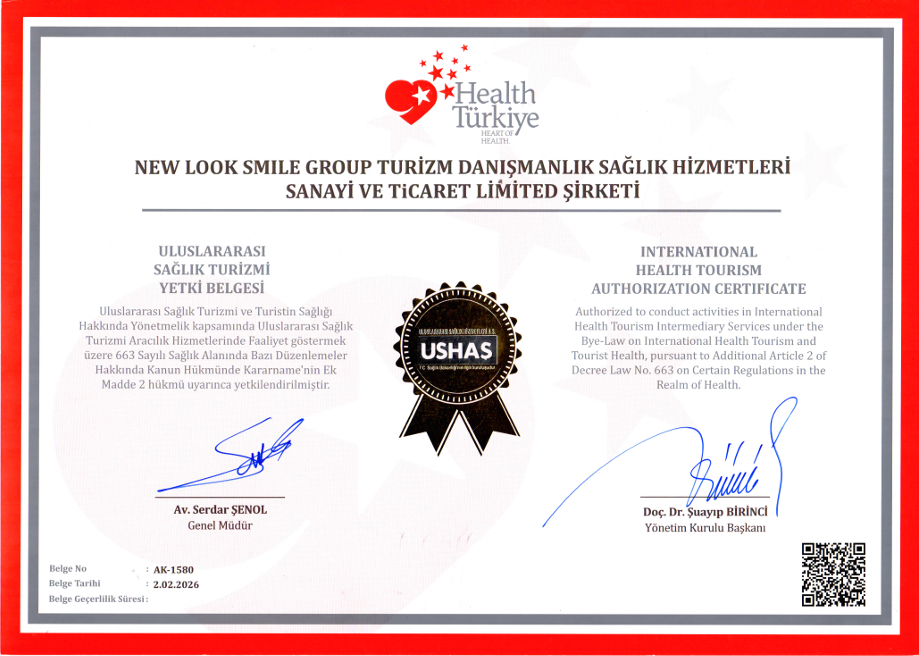
Ministry of Health Authorized — International Health Tourism Authorization, Certificate AK-1580. Click the certificate to view it in full.