

Menu
Dentistry · Teeth Whitening
Teeth Whitening in Antalya, Turkey
Professional teeth whitening is a conservative cosmetic option that lightens the shade of natural teeth. An honest guide to what whitening can achieve, why existing crowns and veneers don’t whiten the same way, and why whitening is often planned before — not after — restorative work.
Ask About Professional Teeth WhiteningFree online consultation · personalised planning · clear treatment options
What is professional teeth whitening?
Professional whitening uses clinically controlled whitening agents to lighten the shade of natural tooth structure. Under the supervision of the treating dentist, the whitening gel is applied in a monitored setting — which is what separates professional treatment from over-the-counter products, both in the result it can achieve and in how your teeth and gums are protected during the process.
Why do teeth become discoloured?
Tea, coffee, red wine and tobacco are the everyday culprits; ageing and your natural tooth colour also play a large role. Some discolouration has dental or medical causes that need professional assessment — which is one reason whitening starts with an examination, not a gel.
Whitening before veneers or crowns — the planning point most people miss
What whitening affects
- Natural teeth can respond to professional whitening
- Results vary by person — how your teeth respond depends on the cause of the discolouration and your natural tooth colour
- Temporary sensitivity can occur and usually settles
What whitening does not affect
- Crowns do not whiten the way natural teeth do
- Veneers do not whiten the way natural teeth do
- Implant restorations and bridges do not whiten the same way either
This is why whitening is often planned before restorative shade selection: if you whiten first, your new veneers or crowns can be matched to your brighter natural shade. Whiten after, and the restorations stay the colour they were made. Good sequencing is part of good planning — and it is exactly the kind of thing your written plan sets out before you travel.
In-clinic whitening in Antalya
In-clinic whitening is carried out in a single supervised session at our partner clinic, usually as part of a wider treatment trip. The treating dentist protects your gums, applies the whitening agent and monitors the process throughout. Where a home whitening option is clinically appropriate for your case, the dentist will discuss it with you — what is offered is confirmed in your plan, not assumed.
Who may not be ready for whitening yet?
Untreated decay, gum disease, significant sensitivity or other oral health problems generally need to be assessed — and often treated — before whitening is appropriate. Health comes before cosmetics, always. If whitening isn’t right for you yet, the honest answer is to fix the underlying issue first, and we will tell you so.
A word of honesty about travelling for whitening
Whitening alone is rarely a reason to fly. Where it earns its place is as part of a broader plan — before veneers, alongside a smile makeover, or as the finishing touch of restorative treatment. If whitening is genuinely all you need, we may well tell you to have it done closer to home. We would rather you trust us than book with us for the wrong thing.
Tooth sensitivity
Temporary sensitivity during or after whitening is common and usually settles within days. The treating dentist manages this with the technique, the gel concentration and aftercare advice — and if you already have sensitive teeth, say so at the assessment so it can be planned for.
Maintaining your whitening result
No whitening result is permanent. How long yours lasts depends on your habits — tea, coffee, red wine and smoking shorten it; good oral hygiene extends it. Your dentist will give you maintenance recommendations for keeping the result at its best.
Common questions
How white can my teeth become?
It varies — honestly. The result depends on your natural tooth colour, the cause of the discolouration and how your teeth respond to treatment. The dentist can indicate a realistic range at your assessment; anyone promising a specific shade for everyone isn’t being straight with you.
Does whitening hurt or cause sensitivity?
Whitening itself isn’t painful, but temporary sensitivity during or shortly after treatment is common. It usually settles within a few days and is managed with the technique and aftercare your dentist recommends.
Can crowns or veneers be whitened?
No. Crowns, veneers and implant restorations do not whiten like natural teeth. If restorative work is planned, whitening is often completed first so the shade of new restorations can be selected afterwards.
Should I whiten before a smile makeover?
Often, yes — whitening first lets the shade of veneers or crowns be selected against your final natural tooth colour. Your treatment plan confirms the right sequence for your case.
How long can the result last?
There is no fixed duration for a whitening result. How long the change remains visible depends on your diet, smoking, oral hygiene and maintenance, and some people choose periodic top-up treatment after dental review.
Is professional whitening different from whitening toothpaste?
Yes. Whitening toothpastes mainly polish surface stains, while professional whitening changes the shade of the tooth itself under clinical supervision. That is why the results — and the safeguards — are different.
Wondering if whitening is enough?
Send a few smile photos and tell us if you already have crowns or veneers. New Look Smile Group coordinates an initial review, and the treating dentist confirms whether whitening is appropriate and how it should be sequenced with any other treatment.
Send Your Smile PhotosView the professional whitening price
Compare whitening and Smile Makeover package options →

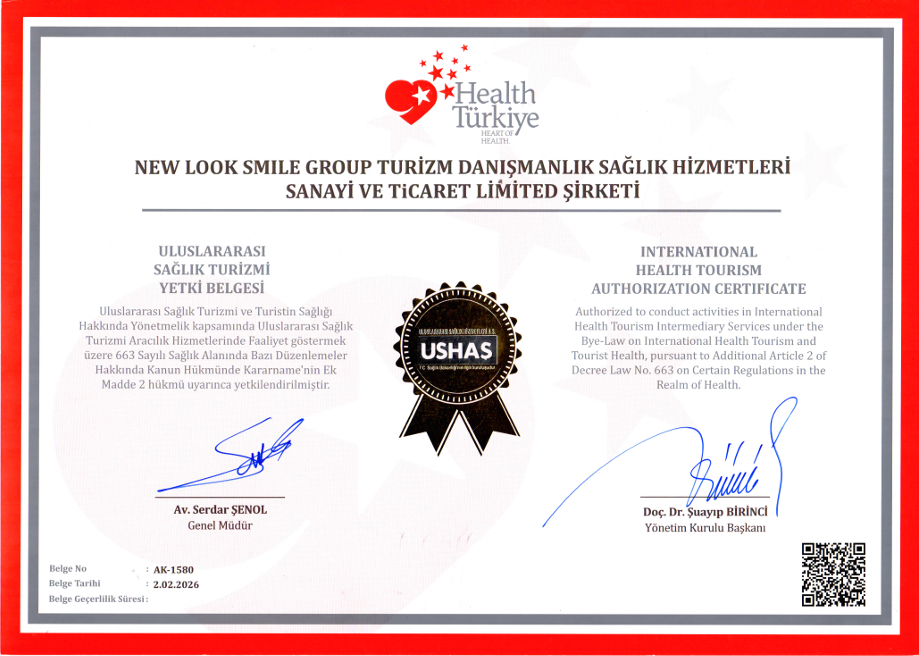
Ministry of Health Authorized — International Health Tourism Authorization, Certificate AK-1580. Click the certificate to view it in full.