

Menu
Dentistry · Root Canal Treatment
Root Canal Treatment in Antalya, Turkey
Root canal treatment may allow an infected or damaged tooth to be treated rather than extracted, depending on its condition. Where clinically appropriate, we believe in preserving your natural tooth first — not replacing teeth that could have been saved.
Request a Dental AssessmentFree online consultation · personalised planning · clear treatment options
What is root canal treatment?
Inside every tooth is soft tissue called the dental pulp. When deep decay, a crack or trauma lets bacteria reach the pulp, it can become inflamed or infected — and that is what causes severe toothache and abscesses. In root canal treatment, the treating dentist removes the affected pulp, cleans and disinfects the root canal system, then fills and seals it. The tooth is finally restored — sometimes with a filling, often with a crown — so it can keep working as part of your bite.
Why might root canal treatment be needed?
Common causes include deep decay, cracks, dental trauma, infection or an abscess, and other damage to the pulp. Symptoms that should be assessed include persistent toothache, swelling, sensitivity, pain when biting and gum swelling — though these symptoms can have several causes and always require professional dental assessment rather than self-diagnosis.
Root canal or extraction — honestly
Why saving the tooth comes first
- Where clinically appropriate, preserving a natural tooth may be considered before extraction and replacement
- A well-treated natural tooth keeps your own root in the bone — no replacement matches that exactly
- Root canal treatment is usually simpler and more affordable than extraction plus replacement
When extraction may be the honest answer
- A tooth too broken-down or cracked to be predictably restored
- Infection that cannot be resolved by treatment or retreatment
- Cases where keeping the tooth would compromise the teeth around it — then implants or bridges are discussed openly
Extraction followed by an implant is not automatically the better option — and a clinic that reaches for the forceps before the assessment is not planning around you. The decision is made by the treating dentist from examination and imaging, and explained so you understand it.
The root canal treatment process
- 1 · Examination and imaging — the tooth is assessed and X-rayed to understand the canals and the infection.
- 2 · Local anaesthesia — the area is numbed so the tooth can be treated comfortably.
- 3 · Access — a small opening is made to reach the pulp chamber.
- 4 · Removal of affected pulp — the inflamed or infected tissue is removed.
- 5 · Cleaning and disinfection — the canals are carefully shaped, cleaned and disinfected.
- 6 · Filling and sealing — the canals are filled and sealed to keep bacteria out.
- 7 · Restoration — the tooth is rebuilt with a filling or crown, depending on how much structure remains.
Will I need a crown afterwards?
Some root-treated teeth do, some don’t. It depends on the remaining tooth structure, the tooth’s position, your bite and the clinical condition — back teeth that take heavy chewing forces often benefit from the protection of a crown, while some front teeth can be restored with a filling alone. Your dentist recommends only what the tooth genuinely needs.
Root canal retreatment
A previously root-treated tooth can sometimes become re-infected or fail to heal as hoped. In selected cases, retreatment — or a small surgical procedure such as an apical resection — may give the tooth another chance before extraction is considered. Whether that is realistic for your tooth is confirmed by assessment.
Recovery and aftercare
Mild tenderness for a few days after treatment is common and usually settles with simple pain relief. Good oral hygiene and any recommended follow-up — including completing the final restoration — protect the result. If anything feels wrong after you fly home, our patient team is reachable 24/7 and coordinates with the clinic on any clinical question.
Common questions
Is root canal treatment painful?
The treatment is carried out under local anaesthesia, so the tooth is numbed while it is treated — for most patients it feels similar to having a filling. Some tenderness for a few days afterwards is normal as the area settles.
How many appointments might be needed?
Some teeth can be treated in a single visit; others — particularly infected or complex canals — may need more than one appointment. The treating dentist confirms what your tooth needs after examination and imaging.
Can treatment be completed during my trip?
Root canal treatment may be completed during the same treatment trip, but timing depends on the diagnosis, complexity of the tooth and any other planned treatment. Your treating clinician confirms the schedule before you book flights.
Can a root canal fail?
Most root canal treatments succeed, but no honest clinic promises 100%. A treated tooth can occasionally become re-infected, and retreatment or apical surgery may then be considered. That possibility is part of the honest conversation before treatment, not after.
Can a tooth still hurt after root canal treatment?
Mild sensitivity for a few days is normal. Pain that is severe, worsening or returns weeks later should be assessed — contact us and we will coordinate with the treating clinic promptly.
Worried about a tooth? Start with an honest assessment
View root canal and general dentistry prices
Send any recent X-rays and a short description of the problem. New Look Smile Group coordinates an initial review; the treating dentist determines whether the tooth may be suitable for root canal treatment or whether another approach is required after clinical assessment.
Request a Dental Assessment

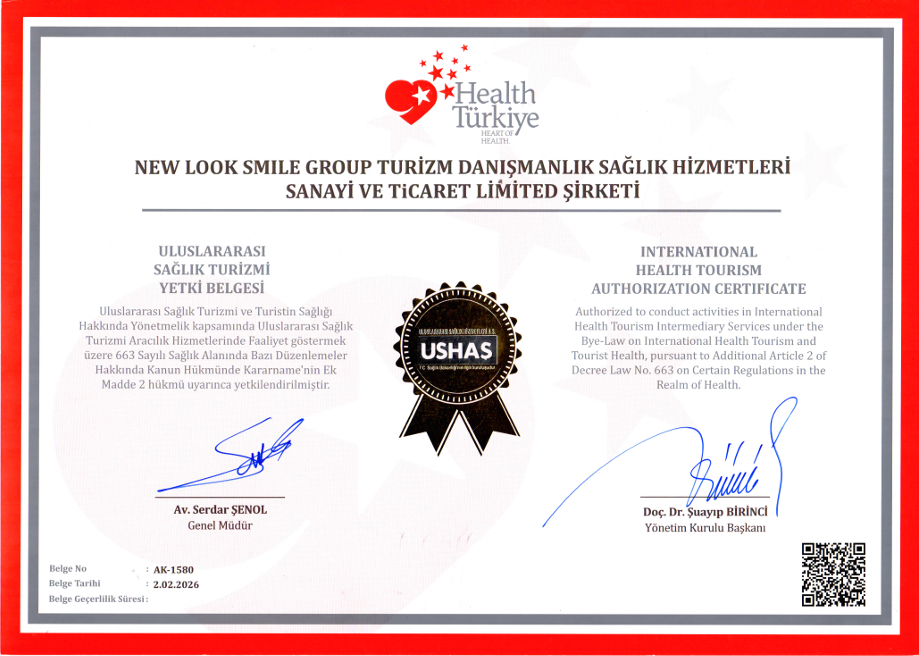
Ministry of Health Authorized — International Health Tourism Authorization, Certificate AK-1580. Click the certificate to view it in full.