

Menu
Healthcare Services · Rhinoplasty & ENT
Rhinoplasty & ENT Surgery in Antalya, Turkey
Nose surgery with an ear, nose and throat (ENT) surgeon in Antalya whose practice is focused on the nose and sinuses: closed rhinoplasty, revision rhinoplasty, septoplasty, turbinate reduction and endoscopic sinus surgery. An honest guide to what each procedure is for, how breathing and appearance are planned together, recovery, risks and the trip.
Ask About RhinoplastyFree online assessment · personalised planning · clear next steps
Why an ENT surgeon for your nose?
The nose is not only a shape; it is an airway. Many people who dislike the look of their nose also breathe poorly through it because of a deviated septum, enlarged turbinates or sinus problems — and a rhinoplasty that ignores function can make breathing worse. An ENT surgeon whose practice concentrates on rhinology approaches the nose from the inside out: airway, structure and appearance are assessed and planned together, and functional and aesthetic surgery can often be combined in one operation.
Your surgeon
Rhinoplasty and ENT journeys coordinated by New Look Smile Group are currently arranged in Antalya. Our team coordinates consultation planning, travel and aftercare, while treatment suitability and procedure details are confirmed through the appropriate medical assessment.
Procedures
Closed rhinoplasty
Reshaping of the nose — a hump, the tip, width or a crooked bridge — through incisions made inside the nostrils, with no external scar across the columella. Typically performed under general anaesthesia, often combined with functional correction in the same operation.
Revision rhinoplasty
Surgery to correct or refine the result of a previous rhinoplasty, whether the concern is appearance, breathing or both. Revision is more complex than a first operation because of scar tissue and altered structure, and it needs realistic goals agreed in advance.
Septoplasty
Straightening of the septum — the wall between the nostrils — when it is deviated and obstructs breathing. Frequently combined with rhinoplasty (septorhinoplasty) so that airway and appearance are addressed together.
Turbinate reduction
Reduction of enlarged turbinates (conchoplasty), the structures inside the nose that warm and humidify air, when they are chronically swollen and block airflow. Often done alongside septoplasty.
Endoscopic sinus surgery
Minimally invasive surgery through the nostrils, using an endoscope, to open blocked sinus drainage pathways in chronic sinusitis or nasal polyps that have not responded to medical treatment.
Functional nasal surgery
A broader term for procedures that restore nasal breathing — including nasal valve repair and combinations of the above — planned from the airway assessment rather than appearance alone.
How planning works
You send clear photos of your nose — front, both profiles, from below and a natural smile — and describe what bothers you, including any breathing, snoring or sinus symptoms and any previous nose surgery. The surgeon reviews them and advises whether surgery is appropriate, what is realistic and which procedures would be involved. In Antalya, the in-person examination (including looking inside the nose with an endoscope where needed) confirms the plan before anything is booked as final. Your written plan sets out the procedure, the anaesthetic, the nights needed in Antalya and the aftercare.
The trip and recovery, honestly
- Rhinoplasty is usually performed under general anaesthesia; depending on the procedure you may go home the same day or stay one night under observation.
- An external splint and internal supports are typically worn for around a week. Most patients remain in Antalya until the splint is removed and the surgeon has reviewed them; the exact number of nights is confirmed in your plan.
- Bruising and swelling around the eyes are normal in the first one to two weeks. You can usually return to desk work within two weeks; strenuous exercise, glasses resting on the bridge and sun exposure are limited for longer.
- Most swelling settles over the first months, but the tip continues to refine and the final shape is judged at around twelve months. Judging a rhinoplasty at six weeks is judging it too early.
- Breathing may feel blocked in the first weeks because of internal swelling; this improves as healing progresses.
Risks and limitations
All surgery carries risk. For nasal surgery this includes bleeding, infection, reactions to anaesthesia, prolonged swelling, numbness of the tip, altered sense of smell, asymmetry or an irregularity that becomes visible once swelling settles, breathing that does not improve as hoped, a septal perforation, and the possibility of needing revision surgery. Some noses — particularly after previous surgery or with very thick or very thin skin — have limits on what can be achieved. The surgeon explains the risks specific to your case and you consent in writing before the operation.
Who may not be suitable
Rhinoplasty is generally not performed before facial growth is complete, and it is deferred during pregnancy, with active infection, uncontrolled medical conditions, some bleeding disorders and heavy smoking, which impairs healing. Realistic expectations matter as much as anatomy: a surgeon who focuses on the nose will decline to operate when the likely result would not justify the surgery, and we support that decision.
Common questions
What is the difference between closed and open rhinoplasty?
In closed rhinoplasty all incisions are inside the nostrils, so there is no external scar and swelling is often less. Open rhinoplasty adds a small incision across the columella for wider access. Our partner surgeon’s practice lists closed rhinoplasty; whether a closed approach suits your nose is decided at assessment.
Can breathing problems and appearance be fixed in one operation?
Often, yes. Septoplasty, turbinate reduction and rhinoplasty are commonly combined so that the airway and the shape are addressed together. That is one of the main reasons to choose an ENT surgeon for nose surgery.
How long do I need to stay in Antalya?
Typically until the splint is removed and the surgeon has reviewed you — usually around a week for rhinoplasty, less for some functional procedures. Your written plan confirms the number of nights for your case.
When will I see the final result?
You will see a clear change once the splint comes off, but swelling — especially at the tip — takes months to settle. The final shape is judged at around twelve months.
I have had a rhinoplasty before. Can it be revised?
Revision rhinoplasty is part of our partner surgeon’s practice. It is more complex than a first operation, so the assessment is more detailed and expectations are agreed carefully. Usually at least a year is allowed after the previous surgery before revision is considered.
What does the price include?
Your written quotation states exactly what is included in your plan. Depending on the arrangement, this may include treatment, accommodation, VIP transfers, medications and aftercare support. Flights and any payment or deposit requirements are confirmed before you book.
Wondering what is realistic for your nose?
Send photos from the front, both sides and below, and tell us about any breathing or sinus symptoms. The surgeon will advise honestly what could be achieved — and whether surgery is the right step for you.
Send Your Photos

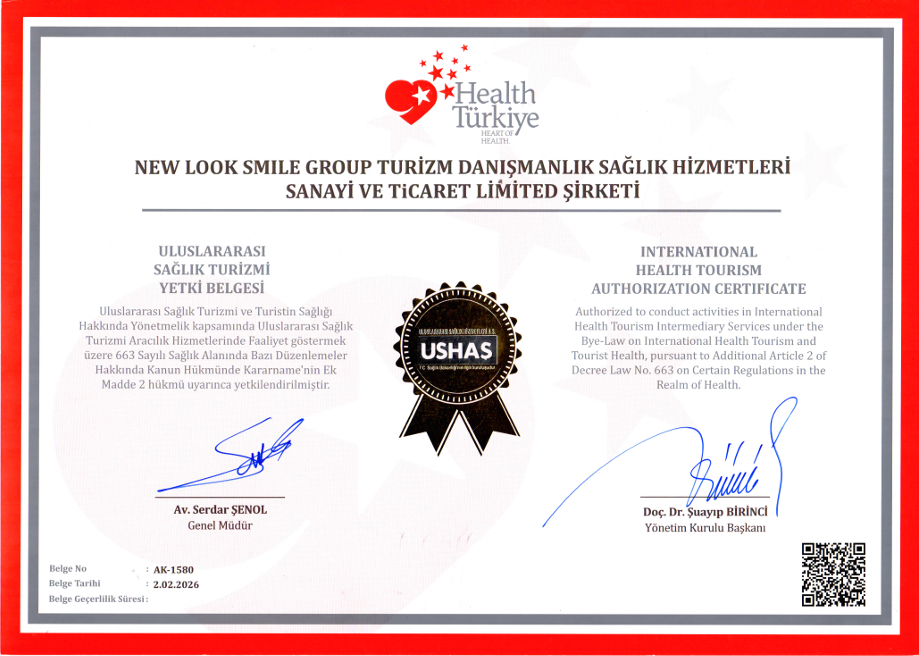
Ministry of Health Authorized — International Health Tourism Authorization, Certificate AK-1580. Click the certificate to view it in full.