

Menu
Dentistry · Veneers
Dental Veneers in Antalya, Turkey
Veneers are thin restorations placed primarily over the front surface of teeth to improve colour, shape, proportion and minor irregularities. The transparent guide — including the question that matters most: how much of your natural tooth needs to be prepared. We’d rather lose a sale than damage a smile.
E.max dental veneer: £250 per tooth. This is an individual treatment fee. Your written quotation confirms the teeth, treatment and any separate travel or accommodation costs. See the published dental treatment fees.
Ask Whether Veneers May Suit Your SmileFree consultation · coordinated clinical review · clear written plan
What are dental veneers?
A veneer is a thin restoration bonded primarily to the front surface of a tooth. Where clinically appropriate, veneers may improve tooth colour, shape, minor spacing, selected chips, worn edges, proportions and minor aesthetic irregularities — while leaving much of the natural tooth intact. That last part is the point: veneer treatment done properly is selective, planned and conservative.
Porcelain and ceramic veneers
Porcelain and ceramic veneers are laboratory-made, layered to mimic the translucency and surface texture of natural enamel, and generally more stain-resistant than composite alternatives. The exact materials for your case are confirmed in your written plan by the treating dentist. If a more conservative option such as composite bonding would achieve your goal, that is what will be recommended.
Who veneers may suit — and who they may not
Veneers may be considered for
- Healthy teeth with cosmetic concerns — discolouration, small chips, gaps or minor misalignment
- People who want a natural-looking improvement, not an artificial “one-size” smile
- Patients with good gum health and enough natural enamel to bond to
Veneers may not suit
- Heavily broken-down, decayed or root-treated teeth — these usually need crowns or other restorations instead
- Untreated gum disease or active decay — health comes before cosmetics, always
- Heavy tooth grinding (bruxism) without a night guard plan — grinding shortens the life of any veneer
- Cases where whitening or alignment alone would achieve the goal with less alteration — we’ll tell you
Final suitability is decided by the treating dentist after a proper assessment — it depends on your enamel, tooth position and bite. If a more conservative option would serve you better, that’s what will be recommended.
Do teeth need to be shaved for veneers?
The honest answer: it varies. Some cases may require very little tooth preparation, while others require enamel reduction to achieve the correct fit, shape and alignment. How much depends on your alignment, existing tooth shape, enamel, the material, the desired result, your bite and the clinician’s treatment plan. No ethical clinic promises “no-prep” veneers to everyone — and where enamel is removed, the change is not reversible, which is why case selection matters so much.
Veneers vs crowns
Veneers mainly cover the front surface of a tooth; crowns cover substantially more tooth structure. They have different clinical indications — veneers improve the appearance of fundamentally healthy teeth, while crowns protect compromised ones — and crown preparation is generally more extensive. Veneers are not simply “thin crowns”. Which is right for each tooth is a clinical decision, and a mixed plan is often the best plan. See the full crowns guide to compare.
Veneers vs composite bonding
Porcelain veneers are laboratory-made, more stain-resistant and suited to broader aesthetic changes; composite bonding is applied directly to the tooth, is often more conservative, and is easier to repair — but can stain and chip more readily over time. Invasiveness, repairability, aesthetics and maintenance all differ, which is why the choice is made per tooth in your plan, not per price list.
Compare veneers, crowns and composite bonding
Smile planning and the trial stage
Good veneer treatment is designed before it is delivered. Depending on your case, planning may use photographs, scans, mock-ups and temporary restorations — so you can review the intended shape and proportion before final veneers are made. Adjustments happen at the design stage, where they are easy, not after bonding, where they are not.
Shade and natural aesthetics
A natural result comes from the details: translucency, surface texture, tooth proportions, shade and facial harmony. Shade selection considers your adjacent teeth, your preferences and how light behaves on real enamel — which is why “one white for everyone” smiles look artificial, and properly planned veneers do not. If you are also considering whitening, it is usually sequenced first so your veneer shade matches your brighter natural teeth.
Durability and maintenance
Veneers can chip, debond or fracture, and they may eventually require replacement — no honest clinic tells you otherwise. They need good daily oral hygiene, ongoing dental reviews and sensible habits; a night guard protects them if you grind. Veneers also don’t stop decay or gum disease, so the health of the tooth underneath still needs care. With good maintenance, quality veneers commonly serve well for many years, though individual results vary. Before deciding, use our aftercare and warranty checklist to confirm the written cover, follow-up arrangements and any additional costs.
How should I compare veneer costs?
Our published E.max dental veneer fee is £250 per tooth. An E.max crown is a different restoration, even though its listed fee is also £250 per tooth. Compare the restoration type, material and number of teeth in each quotation. A per-tooth veneer fee and a smile-makeover package describe different scopes. Your written plan should identify which teeth are included and separate treatment fees from accommodation, flights and any extras. Suitability and the final treatment plan are confirmed by the treating dentist.
Check our individual veneer prices and smile-makeover package inclusions. If the quotation uses different restoration names, use the veneers, crowns and bonding comparison to prepare questions for your treating dentist.
Common questions
Do veneers damage teeth?
Ask what preparation is proposed for each tooth and what alternatives are suitable. Some veneers require enamel removal, which is not reversible. Your treating dentist should explain the risks, limitations and ongoing care before you decide.
Do veneers require tooth shaving?
Some cases need very little preparation; others need enamel reduction for correct fit and alignment. The amount depends on your teeth, the material and the plan — your dentist shows you what your case would involve before anything starts.
Are veneers permanent, and can they fall off?
Veneers are long-lasting but not lifetime-permanent — they can occasionally debond or chip, and may eventually need replacement. If a veneer debonds, the treating dentist should assess the cause and the condition of the veneer and tooth before deciding whether re-fitting or replacement is appropriate.
Can veneers stain?
Porcelain resists staining well — better than natural enamel or composite — though the cement margins can pick up stain over many years. Unlike natural teeth, veneers do not respond to whitening, so shade decisions are made carefully at the planning stage.
Veneers or crowns — how is the choice made?
The choice is based on the condition and treatment needs of each tooth. Veneers cover mainly the front surface and may suit selected teeth needing cosmetic change; crowns cover the whole tooth and are used when full coverage is clinically appropriate. The treating dentist should explain why an option is being recommended and what alternatives exist.
How many veneers do I need?
Only as many as your smile actually needs — there is no standard number. Some cases treat two teeth, others eight or more; it depends on your smile width, the condition of your teeth and your goals, and it is agreed with you at the design stage.
What about the “Turkey teeth” stories I’ve seen?
“Turkey teeth” is a media and social-media expression, not a clinical diagnosis or treatment plan. Ask which procedure is proposed for each tooth, why it is recommended and what alternatives exist. New Look Smile Group helps coordinate your assessment in Antalya; the treating dentist confirms the clinical plan.
Start with the plan, not the pressure
Send a few smile photos to New Look Smile Group. Our team coordinates the initial review and any clinical discussion needed so you can understand whether veneers, bonding, crowns or another approach may suit your case before deciding.
Get your veneer plan on WhatsAppCompare dental package options →

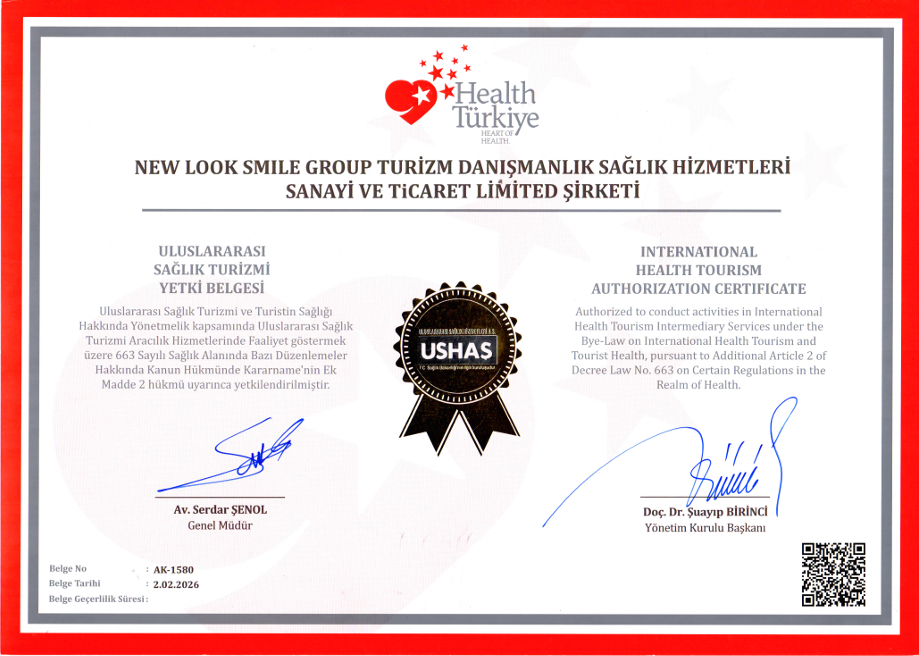
Ministry of Health Authorized — International Health Tourism Authorization, Certificate AK-1580. Click the certificate to view it in full.