

Understand the difference between an implant problem and a restoration problem, when to seek assessment and what care may involve.
October 10, 2026
A dental implant can develop problems during healing or after years of use. A loose crown or bridge may instead involve the attached restoration. A dentist must assess the cause before deciding on care. Removal, bone grafting or replacement may be considered in some cases, but replacement is not automatic or suitable for everyone.
Seek urgent dental assessment for worsening pain, swelling, discharge, a fever with dental symptoms or a newly loose implant or restoration. Symptoms do not establish the diagnosis, but they should be checked.
If you have difficulty breathing, speaking or swallowing, substantial swelling in your mouth, or swelling affecting an eye or your vision, seek emergency care immediately. Do not wait for a remote reply or a flight back to Antalya. NHS dental infection and emergency guidance.
An implant needs to form a stable connection with the surrounding bone. Occasionally adequate integration does not occur, so the fixture cannot be used as intended. The treating clinician assesses the site, healing and possible contributing factors. This differs from simply needing an adjustment to the teeth attached above it. NHS implant risks.
Inflammation or infection can affect the tissues around an implant. Peri-implantitis involves inflammation and loss of supporting bone, and can threaten the implant. Mechanical forces and other clinical factors may also affect the implant or its restoration.
Restorations and connecting parts can loosen, wear or break. An attached crown or bridge requiring repair is a different finding from loss of the implant's support in bone. Both need assessment; neither should be diagnosed from a photograph alone. European Federation of Periodontology: peri-implant diseases · CUH implant complications.
Contact a dentist promptly about persistent discomfort, increased bleeding, swelling, discharge, a bad taste or movement of implant-supported teeth. These symptoms can have different causes. Some problems develop without obvious symptoms, so routine professional reviews remain important.
Tell the clinician when the problem started and whether the restoration is temporary or final. Bring your implant and component records. Avoid trying to tighten or repair the restoration yourself. EFP patient information.
The dentist examines the implant area, tissues and attached restoration, and decides which records or images are needed. Previous records may help assess changes. The examination establishes what is happening and whether the implant and restoration can be maintained appropriately. A remote discussion can coordinate the next step but does not replace a necessary examination. EFP clinical guideline.
Suspected failure does not always mean the implant must be removed. Depending on the diagnosis, care may involve professional cleaning and disease management, treatment of affected tissues, or repair or replacement of a prosthetic part.
In some cases an implant must be removed. Immediate replacement may not be advisable when significant bone loss has occurred. Where appropriate, the dental surgeon may recommend bone grafting before considering another implant.
After healing and reassessment, a replacement implant may be placed if conditions are suitable. The final crown or prosthetic restoration is fitted when the implant has integrated adequately and the surgeon confirms readiness. This is one possible staged pathway, not a guarantee that grafting, replacement or a particular outcome will be possible. The sequence and timing depend on the patient. CUH implant options and stages.
The surgeon also considers the cause of failure, remaining bone, tissue health, medical factors and restorative alternatives. Another implant may be unsuitable; a bridge, denture or another individually assessed plan may be considered instead.
Ask for reasons, alternatives, stages and charges in writing. Do not assume a component warranty includes every assessment, treatment or travel expense. Our aftercare and warranty checklist explains what to clarify.
The treating dental teams do not recommend smoking during recovery. Smoking can interfere with wound healing and increase the risk of implant complications. Tell the treating team about smoking so they can discuss risk and support. A short pause does not guarantee successful healing. NHS implant aftercare · NHS smoking and wound-healing information.
Follow the individual written instructions provided by your treating clinician. Advice may differ for implant placement, bone grafting, extractions and other procedures. Ask the clinician to specify restrictions and precautions for your case rather than applying another patient's timetable.
Good cleaning and professional maintenance also matter. Discuss any history of gum disease during planning and follow-up; a problem should not automatically be blamed on a patient's behaviour. EFP prevention guidance.
The treating dental teams do not recommend alcohol during recovery. Alcohol may interfere with recovery and can be incompatible with some medicines, including certain prescribed painkillers or antibiotics.
Follow the written aftercare and medicine instructions for your procedure. Ask your treating clinician or pharmacist about the medicines actually prescribed, the restrictions that apply and when alcohol may be resumed. No single alcohol-free period applies to every treatment and medication. NHS example of an alcohol–medicine interaction.
These smoking and alcohol instructions are individual aftercare matters, not permission to resume after a fixed number of days.
New Look Smile Group coordinates patient communication with the treating provider. Clinical diagnosis and treatment belong to dental professionals. Seek local urgent care when needed and tell the coordination team what has happened.
For planning information, read about dental implants in Antalya. Contact our team to coordinate assessment questions or obtain the appropriate records. This guide does not promise a diagnosis, replacement or clinical outcome.
Planning your treatment journey? Ask our team about your options, accommodation and next steps — no pressure to book.
Get your free consultation

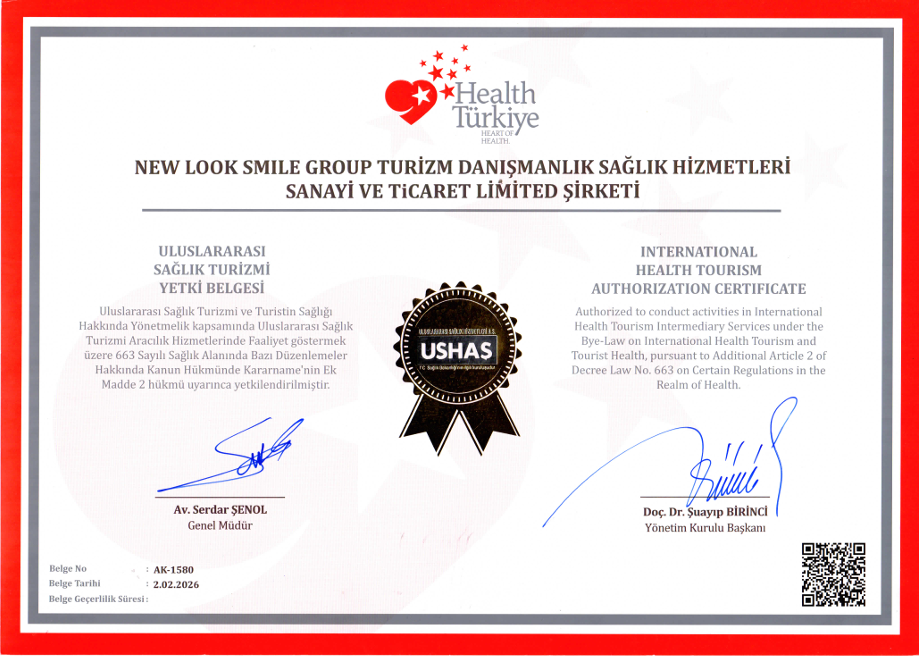
Ministry of Health Authorized — International Health Tourism Authorization, Certificate AK-1580. Click the certificate to view it in full.